

CXO Coaching vs. Executive Mentoring: What’s the Real Difference?
Sitting at the top of an organisation gets lonely fast. You might have a great team and decades on your resume, but finding a safe space to test unpolished ideas before taking them to the board is surprisingly hard. Certain topics are just too delicate for internal staff. Other issues hit too close to your own position to view clearly.
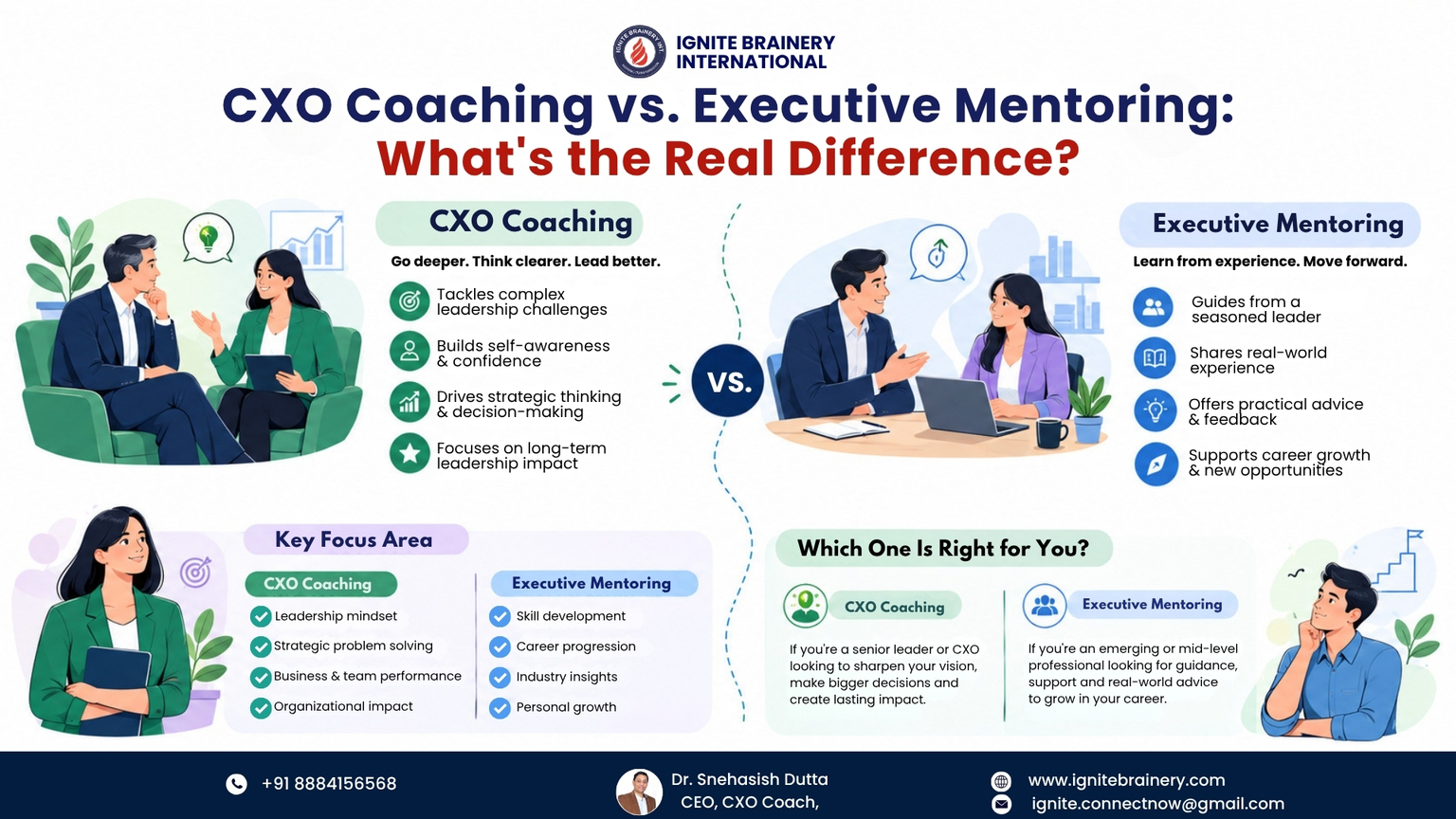
People bundle coaching and mentoring together all the time, even though the actual meetings look completely different. One session might spend an hour dissecting why a single team update went sideways. Another might involve listening to an experienced executive talk through a mistake they made fifteen years ago. The real difference in CXO coaching vs executive mentoring comes down to what you actually need solved.
8 Differences Between CXO Coaching and Executive Mentoring
1. The Executive’s Current Career Situation
Coaching usually starts because something specific hits a wall. Maybe someone stepped into a bigger seat and realised the jump is way harder than planned. Or maybe a seasoned executive keeps clashing with their department and cannot figure out why.
Mentoring happens under different circumstances. Nothing has to be broken. A leader might just want regular time with a veteran who already walked the path they are on now. The agenda shifts naturally as the years go by. That kind of long-term guidance is often where executive mentoring has its strongest value.
2. The Value Mentor or Coach Brings
A good coach does not need C-suite experience to be useful. CXO coaching focuses on your habits, blind spots, and decision-making process. They spot the subtle details you gloss over when you are rushing through your week.
Mentors get picked for their resume. A former CEO knows board pressure because they lived through it. An experienced commercial leader brings real scars—they have fired the wrong person, missed market shifts, or backed bad strategies. That hands-on history changes the tone of the conversation.
3. The Same Incident Can Lead to a Different Conversation
Consider a situation where a senior leader leaves a strategy meeting assuming full team agreement, only to find out later the staff felt ignored. CXO coaching sessions keep the focus strictly on that specific event. The discussion centres entirely on spoken words, missed cues, and the precise moment the room’s atmosphere shifted.
A mentor examines the same event by looking backwards. A similar period from their own working life is usually brought up. They outline the poor choices they made and the damage that followed. The final decision is still left entirely in your hands. However, the discussion is backed by a leader who survived that exact same error years ago.
4. One Relationship May Have an End Date
Coaching usually operates on a strict clock. A company might hire a CXO coach for six months to help a newly promoted VP adjust to managing peers or talking to the board. Once those specific goals are met, the engagement wraps up. A CXO coaching engagement is often built around clear goals and a set period.
Mentoring rarely has a hard stop. You might check in with the same mentor while running your first business and still call them a decade later at a totally different company. The topics evolve as your career changes, which is why these relationships often last for years.
5. Advice Is Not Used in the Same Way
A CXO coach seldom delivers a ready-made answer for a problematic employee. You are required to outline the exact end result you expect to achieve instead. This line of questioning demands a great deal of patience, a pace that often frustrates leaders used to issuing rapid daily directives.
Mentorship operates in a far more direct manner. A seasoned executive simply states how they handled a comparable situation and warns against specific pitfalls. A firm recommendation is put on the table. You are entirely free to reject the input, but the advice given is clear, tested, and unfiltered by coaching frameworks.
6. Progress Can Look Quite Different
Coaching tracks tangible behaviour shifts. If you micro-manage every operational detail, you can track whether you stopped stepping in over a two-month period. You see the changes landing in real time. CXO coaching can make those changes easier to examine against the leadership goals set at the start.
Mentoring progress is trickier to track week to week. A mentor might tell a story that stays quietly in the back of your head for months. Then, when a board conflict pops up six months later, that conversation suddenly saves you from making a bad move. This is an important distinction in executive coaching vs. mentoring.
7. The Working Arrangement Is Usually Different
Coaching runs on a calendar. Sessions are booked weeks ahead, usually the same slot each time, and every one has a target attached rather than a vague plan to work on leadership. When a company pays for it, someone in HR typically wants a summary each quarter, so the coach and executive settle early on what stays private and what gets reported. That conversation happens in the first session, before anything substantial gets discussed.
Mentoring rarely runs on a schedule at all. It might be coffee whenever the mentor is in town, or a call because the executive had a difficult week and needed to hear from someone who had faced something similar. Neither side usually writes down what the relationship is meant to cover, and that works fine until it doesn’t. A mentor who hasn’t heard from their mentee in months may simply assume things are going well, without either person confirming it.
8. The Need Matters More Than the Label
If you are trying to break a bad communication habit, listening to someone tell war stories about their old job won’t help much. You need someone calling out your choices and holding you accountable. That calls for a coach. The difference between coaching and mentoring becomes clearer when the need is a specific leadership change.
But if you already know how you operate and your main issue is figuring out whether to accept a new role or deal with a board appointment, you need experienced judgment. Look for someone who has taken those specific risks already, not someone who has read about them. Once the actual gap is identified, the choice tends to settle itself. Ignite Brainery can support executives looking for focused leadership development and professional guidance.
Conclusion
The division between these two functions rests on the dialogue itself, rather than any official title. CXO coaching vs executive mentoring demands a strict review of your daily habits, personal blind spots, and direct management decisions. Mentorship operates differently. A veteran executive’s history is applied to guide your broader, long-term career choices.
Explore leadership coaching and mentoring support with Ignite Brainery. Executives are never forced to pick just one setup forever. A coach gets the work done during a tough job change, while a mentor is kept around to listen to your ideas for well over a decade. You simply need to look at the exact problem sitting on your desk today and track down the help that is missing.
FAQs
Q1. What is the difference between CXO coaching and executive mentoring?
CXO coaching usually focuses on a specific leadership issue, behaviour or role transition. Executive mentoring is more often based on the mentor’s own experience and can cover broader career and business decisions.
Q2. Does a CXO coach need to have been a CEO?
Not necessarily. A coach can work with a CXO by examining leadership habits, decision-making, communication and blind spots. The coach does not have to have held the same executive position.
Q3. When should an executive consider mentoring?
Mentoring can be useful when an executive wants advice based on experience. This may include career decisions, board responsibilities, succession planning or situations where someone else’s first-hand experience could provide useful perspective.
Q4. Can an executive work with both a coach and a mentor?
Yes. The two relationships can serve different purposes. Coaching may focus on a particular leadership challenge, while a mentor can provide longer-term advice about career and business decisions.
Q5. How long does executive coaching or mentoring usually last?
Coaching often has a defined period based on the goals agreed at the beginning. Mentoring may continue for much longer, sometimes for years, with the topics changing as the executive’s role and career develop.