


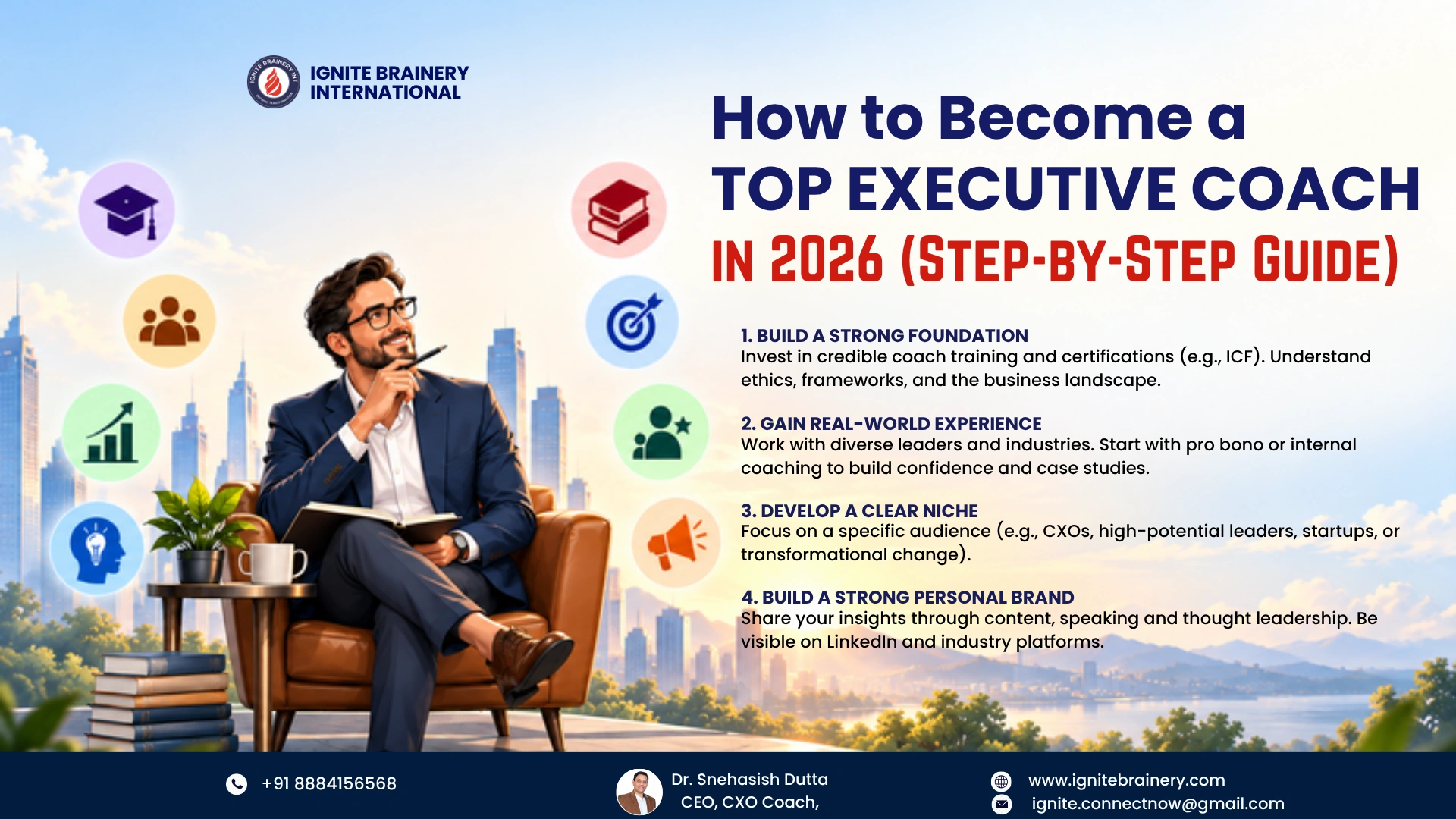
How to Become a Top Executive Coach in 2026 Step-by-Step Guide
Executive coaching has become an increasingly valuable profession for organizations and professionals looking to improve leadership, decision-making, communication, and performance. As businesses face rapid technological change, evolving workplace expectations, and increasingly complex leadership challenges, skilled executive coaches can play an important role in helping leaders navigate these demands.
If you want to build a successful career as a Top Life and Executive Celebrated Coach, 2026 is an excellent time to develop your expertise, credibility, and coaching approach.
What Does an Executive Coach Do?
An executive coach works with business leaders, senior professionals, founders, and managers to help them identify challenges, strengthen leadership capabilities, and achieve meaningful professional goals.
Unlike traditional consulting, executive coaching focuses heavily on helping clients discover solutions through structured conversations, reflection, feedback, and practical action plans.
A professional coach may help clients improve:
- Leadership and management skills
- Executive communication
- Strategic thinking
- Decision-making abilities
- Emotional intelligence
- Conflict management
- Team performance
- Career direction
- Work-life effectiveness
- Personal confidence
The best coaches don’t simply tell executives what to do. They create an environment where clients can think differently, recognize blind spots, and develop sustainable strategies.
Step 1: Build a Strong Foundation in Coaching
The first step toward becoming a successful executive coach is understanding the fundamentals of professional coaching.
Learn about coaching methodologies, active listening, powerful questioning, goal setting, behavioral change, and accountability. You should also understand the difference between coaching, mentoring, consulting, therapy, and training.
A strong foundation allows you to work with clients responsibly while maintaining clear professional boundaries.
Step 2: Develop Business and Leadership Knowledge
Executive clients operate in complex business environments. Therefore, understanding leadership and business is essential.
Study areas such as:
- Organizational leadership
- Business strategy
- Corporate culture
- Team dynamics
- Change management
- Performance management
- Innovation
- Entrepreneurship
You don’t necessarily need to be an expert in every industry. However, understanding how organizations function will help you ask more relevant questions and understand the challenges executives face.
Step 3: Gain Professional Coaching Credentials
Professional credentials can strengthen your credibility and demonstrate your commitment to coaching standards.
Aspiring coaches can explore recognized professional coaching education and certification pathways. Choose programs carefully by considering their curriculum, practical coaching experience, ethical standards, mentorship opportunities, and recognition within the coaching industry.
Certification alone does not make someone an exceptional coach. It should be combined with practical experience, continuous learning, and strong interpersonal skills.
Step 4: Develop Your Own Coaching Framework
Successful executive coaches often develop a clear methodology rather than relying on generic advice.
Your coaching framework might include:
Assessment → Goal Setting → Insight → Action → Accountability → Review
For example, begin by understanding the executive’s current situation. Identify specific goals, explore behavioral patterns, create practical actions, and regularly review progress.
A structured approach makes coaching more measurable and gives clients a clearer understanding of their development journey.
Step 5: Strengthen Communication and Emotional Intelligence
Executive coaching is fundamentally relationship-driven. Excellent communication skills can make a significant difference in the quality of coaching conversations.
Learn how to listen without immediately judging or solving the problem. Ask questions that encourage deeper thinking. Pay attention to tone, hesitation, emotions, and patterns in a client’s responses.
Emotional intelligence is equally important. A coach should understand how emotions influence leadership behavior, workplace relationships, decision-making, and performance.
Step 6: Gain Real-World Coaching Experience
Theory becomes valuable when you can apply it effectively.
Start by gaining supervised or structured coaching experience where appropriate. Work with professionals at different career stages and learn from every coaching conversation.
After each session, reflect on questions such as:
- Did I listen effectively?
- Did I ask meaningful questions?
- Did the client gain a new perspective?
- Did we establish clear actions?
- What could I improve next time?
Continuous reflection helps coaches become more intentional and effective.
Step 7: Build Authority and Personal Brand
Becoming a recognized executive coach requires more than coaching ability. You also need professional visibility.
Create valuable content around leadership, executive development, career growth, communication, and workplace transformation. Publish insightful articles, participate in professional discussions, speak at relevant events, and share practical leadership perspectives.
This is where Ignite Brainery can serve as an example of a brand centered on leadership transformation and professional development. A strong coaching brand should clearly communicate its expertise, values, methodology, and the type of leaders it helps.
Instead of simply claiming to be the best coach, demonstrate expertise through useful, evidence-informed content and meaningful professional insights.
Step 8: Continue Learning in 2026 and Beyond
The executive coaching profession continues to evolve. Artificial intelligence, hybrid work, changing employee expectations, global business challenges, and new leadership models are influencing how executives operate.
A forward-thinking coach should therefore continue learning.
Attend professional development programs, read leadership research, study organizational trends, seek peer feedback, and regularly evaluate your coaching approach.
The goal is not to know everything. It is to remain curious, adaptable, and committed to professional growth.
What Makes a Top Life and Executive Celebrated Coach?
Becoming a Top Life and Executive Celebrated Coach is ultimately about creating meaningful value for clients.
Exceptional coaches combine coaching expertise with business understanding, empathy, communication, strategic thinking, and ethical professionalism. They help clients move beyond short-term motivation toward sustainable behavioral and leadership improvements.
At Ignite Brainery, leadership development can be positioned around helping professionals gain greater clarity, strengthen their leadership capabilities, and prepare for the challenges of an evolving business world.
Final Thoughts
Becoming a successful executive coach in 2026 requires a combination of education, practical experience, leadership knowledge, communication skills, credibility, and continuous development.
Start by mastering coaching fundamentals, gain practical experience, develop a distinctive methodology, build your professional authority, and remain updated with emerging leadership trends.
Most importantly, remember that executive coaching is not simply about giving advice. It is about helping leaders discover better perspectives, make intentional decisions, and turn insight into measurable action.


Top Life and Executive Celebrated Coach | Leadership Growth
October 16, 2026[…] where you are today, and it will hurt very badly if all the work you put in didn’t pay off. Top Life and Executive Celebrated Coach is […]